We remain fully operational. Our teams are working around the clock to ensure your deliveries continue safely.

Descargar la aplicación


Servicios al cliente
Sobre nosotros
Copyright © 2025 Desertcart Holdings Limited
Descargar la aplicación
Buy anything from 5,000+ international stores. One checkout price. No surprise fees. Join 2M+ shoppers on Desertcart.
Desertcart purchases this item on your behalf and handles shipping, customs, and support to Guatemala.
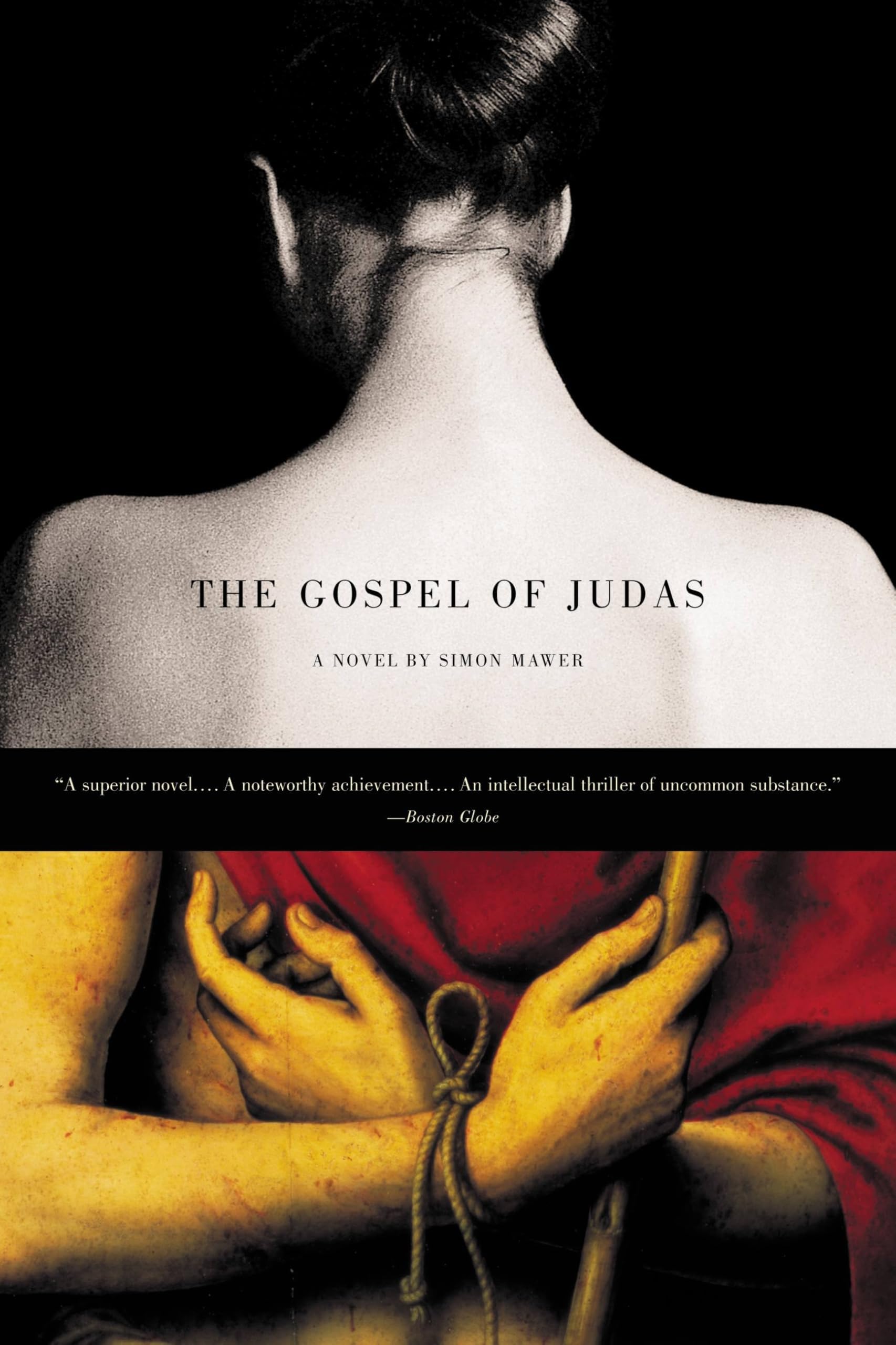
desertcart.com: The Gospel of Judas: A Novel: 9780316973748: Mawer, Simon: Books Review: Another winner from a brilliant writer! - Simon Mawer is brilliant and definitely up there among my favourite writers. The Gospel of Judas is the fourth book I have read by this writer and he never disappoints. The story line centres around Leo,a catholic priest who has an affair with a married woman and the dire consequences of that affair. He plays a leading role in translating an ancient scroll which is believed to be written by Judas and there are consequences to that. As with other stories by Mawer we are taken back in time (World war 2) to be introduced to Leo's mother which provides another insight into Leo. The story is complex in many ways which provide the reader with much opportunity for thought. Leo was perhaps difficult to place, his character not very well defined, I felt, but small criticism for a wonderful book. I love Simon Mawer's use of language which he obviously loves to play with, and I suspect he has a deep respect and liking for women! (Even though some of them are such manipulative wenches!) I recommend highly The Gospel of Judas to anyone who enjoys intelligent but easy to read literature. Review: to understand him - This book lets us look at the character of Judas in his own time and feelings of those around him.
| Best Sellers Rank | #3,817,668 in Books ( See Top 100 in Books ) #2,567 in Historical World War II & Holocaust Fiction #2,995 in World War II Historical Fiction #4,505 in Religious Historical Fiction (Books) |
| Customer Reviews | 3.7 3.7 out of 5 stars (215) |
| Dimensions | 5.5 x 0.93 x 8.5 inches |
| ISBN-10 | 0316973742 |
| ISBN-13 | 978-0316973748 |
| Item Weight | 12 ounces |
| Language | English |
| Print length | 352 pages |
| Publication date | May 8, 2002 |
| Publisher | Little, Brown Paperbacks |
A**E
Another winner from a brilliant writer!
Simon Mawer is brilliant and definitely up there among my favourite writers. The Gospel of Judas is the fourth book I have read by this writer and he never disappoints. The story line centres around Leo,a catholic priest who has an affair with a married woman and the dire consequences of that affair. He plays a leading role in translating an ancient scroll which is believed to be written by Judas and there are consequences to that. As with other stories by Mawer we are taken back in time (World war 2) to be introduced to Leo's mother which provides another insight into Leo. The story is complex in many ways which provide the reader with much opportunity for thought. Leo was perhaps difficult to place, his character not very well defined, I felt, but small criticism for a wonderful book. I love Simon Mawer's use of language which he obviously loves to play with, and I suspect he has a deep respect and liking for women! (Even though some of them are such manipulative wenches!) I recommend highly The Gospel of Judas to anyone who enjoys intelligent but easy to read literature.
S**N
to understand him
This book lets us look at the character of Judas in his own time and feelings of those around him.
K**S
Too much or too little: take your pick
Simon Mawr is ambitious. In his *Gospel of Judas*, he wants nothing less than to paint a portrait of post-Christian doubt. The main character, Father Leo Newman, is an everyperson who represents those of us in the earlier 21 century who can no longer believe in the old religion and are forced to create new identities for themselves (the name "Newman" isn't accidental). As such, the novel is a kind of spiritual fin de siecle. Although this theme isn't exactly a new one, the spin that Mawr puts on it is quite wonderful: what happens to a man--to a culture--already on the religious edge when a new "gospel" is discovered that claims to have been written by Judas Iscariot and gives eyewitness testimony AGAINST the Resurrection? The good news, then, is the exciting concept that inspires the novel. The bad news, I fear, is that Mawr couldn't quite pull it off. The novel reads as if there are two books crammed into one: Newman's unhappy love affair with Madeleine Brewer, and Newman's involvement in the discovery and translation of the Judas Gospel. Either tale is a stand-alone novel. Shoved together, neither quite comes off. Too much time is dedicated to the love affair, too little to the gospel, such that the last 50 pages are breathless, as if Mawr is furiously trying to tie all the loose ends together. Nor does it help that Mawr tries to weave together two different sets of flashbacks into the story line. One of the casualties of this shaky structure is Father Leo himself, who comes across as a curiously wooden figure. We never quite understand who or what he is. Nor is his enigmatic nature, I believe, intentional on Mawr's part. It comes from the fact that Newman isn't fully developed as a literary character, and that in turn comes from the fact that the novel is either too long or too short, depending on your perspective. Either separate its two tales, or extend the narrative far enough to do justice to them both. Still, Mawr is a wonderful wordsmith who can do beautiful and sometimes breathless things with the language. Moreover, the female characters in this novel are masterfully portrayed, particularly Magda. *The Gospel of Judas* is flawed, but it's well worth a read.
D**E
Many Judases
While it has a papyrus from a Dead Sea cave that offers a radically different version of Christ's life and the founding of the church, like Da Vinci Code and its numerous imitators, this is not a thriller. It is a novel about a priest's doubt, a complex drama in which the discovery of a putative "Gospel of Judas" plays a decidedly minor role and only really in the last third of the book. The story of Father Leo Newman, a British papyrologist who lives in Rome, has as much in common with Bernanos' Diary of a Country Priest and J.F. Powers' Morte d'Urban as it does with the garden variety biblical thriller. Mawer in fact has such an understanding of the celibate's mind, the emotional stunting that accompanies the vow of chastity, the fragile foundation in faith for this type of dedication, that it would seem he was in the seminary. If he was, his bio gives no indication of it, so perhaps he has simply gotten to know a number of priests well in his 30 years of living in Rome. In any case, he describes those feelings with considerable insight. Less surprising is how Mawer can make Rome palpable with a few deft strokes. These are not elaborate descriptions but telling details that betray an intimacy with the sights, sounds and smells of the Eternal City. I've only spent a smattering of weeks in Rome, but the city came rushing back into my memory in Mawer's narrative. There is more to say about the plot but it is the language that is in the forefront. It is a muscular prose, as vivid in its description of the tangible as the intangible. It is a sophisticated, sinuous narrative that has room for Latin, Italian, Greek, German seamlessly embedded in the text. He works at it, as evidenced in this statement from an interview he gave: "To write decent novels you have to be in love with the language. You have to feel the texture of it between your fingers, mould it like clay, carve it like marble. Despite all the creative writing programs in the world, I am sure this ability cannot be taught. So I try to use the meanings of words, of place names, of personal names, to inform the narrative." This is exactly what comes across. In this book, just for instance, Mawer uses the redolent names of Rome's churches to convey the grandeur, the historicity, the plasticity, even, of these monuments -- Santa Maria Maggiore, San Crisogono, Santa Maria dell'Anima, San Lorenzo fuori le mura. His descriptions in various vignettes from the past of the picnics and outings that his mother, the wife of the German ambassador to Italy, made in wartime Rome evoke the splendid ruin of Italy's history. Such pursuit of civilized leisure even as the Axis war machine rains terror on the rest of Europe is reminiscent of Visconti's "The Damned." Judas Iscariot, the apostle, is the author of the gospel that Leo comes to believe is genuine. But the novel is full of other Judases. Leo's mother betrays her lover in a way that can know no forgiveness (except from the betrayed), and Leo himself earns the title of Judas for his work on the Gospel of Judas. The details of the gospel are interesting, how it transforms the narrative of Jesus' life simply by shifting a couple of small facts. Whether genuine or forgery, whether a truthful account or deliberate misinformation, the gospel of Judas has little chance of challenging the centuries-old Christian faith. History has too much invested in the received tradition to accept any other truth, even if factual. Yes, the gospel has information that could shake Christianity to its foundations, but it can never earn the credence that would allow this to happen. Just where the author stands in all this become clear in his account of Leo's "pilgrimage" at the end of the book, which explains why the church will remain triumphant and why it's futile to seek the truth. Mawer clearly doesn't set out to write bestsellers. This is anything but a potboiler, though it is a compelling read and has its own suspense. Nor will his willingness to question Christianity and make a faith-challenged priest his hero endear him to legions of believers. But the reader doesn't have to identify with Leo. The reader can see him as a flawed, in some ways tragic individual. The Gospel of Judas is a question, not an answer, and the reader can decide where the truth lies.
J**T
As expected
A**A
Father Leo Newman is asked to prove or disprove the validity of an ancient scroll written in the first century AD, purporting to be a true account of the life of Jesus told by Judas Iscariot. If true it will destroy Christian beliefs. But Father Newman is not only an expert on the deciphering of the writings on ancient scrolls, he is a Roman Catholic priest who has fallen in love with Madeleine, a married woman with a troubled personality. I was drawn into the book in the first few pages and it captured my imagination. It is beautifully written. I could feel the torment of the relationship and also Leo's shock and concerns about the revelations in the papyrus. The ending was totally unexpected. The story is not tied up in a convenient bow. It contains all the anguish that is within the story. I know I could read this again and gain even more from the story. In three words - a magnificent read!
L**B
Despite its title, this pretty accomplished novel is not connected - not at all, in no way and not by any stretch of the imagination - with the recent outpouring of thrillers mining the fertile lode of catholic history, medieval legend and modern-day religious relativism. Those reviewers who expected something like the Da Vinci Code perhaps should have read the blurbs more carefully. They do Simon Mawer and his work a great disservice with their disappointed 1s and 2s. Sure, the Gospel of the title is a papyrus that needs to be deciphered. But that's it. No coded message, no mystery, no buried treasure. The treasure in this book is its treatment of its main theme : the theme of deception and betrayal. Almost every character is a Judas in some way - by extension we are all traitors and betrayed. And when betraying ourselves, we are both at the same time. The book is pervaded with the smells and sounds of betrayal : the clipping of a woman's heels on the pavement, the odours of the room where vows are broken. The shifts from one story to another jolt us into realising that the same traitorous acts recur generation after generation and echo beyond our own lifetimes, shaping others. Even though this isn't Da Vinci Code mark 14, I would recommend it. It's an interesting, thought-provoking and well-written book.
M**N
I had thoroughly enjoyed reading The Girl Who Fell from the Sky and wanted to try more from this author. It was a reasonably good holiday read but I would say nothing more than that. The plot regarding the Gospel felt no more convincing than other more Davinci Code type books and I got a little bored with the war-time parts of the story even though they should have been important to the formation of Father Leo with regard to his mother and his chaldhood. The more recent past of the affair was well put but the constant Mary/Madelaine/etc. references annoyed me eventually. This is much more than a Brown-esque genre book and I certainly learnt a little from it but I call it a reasonable read whilst thinking The Girl Who Fell From The Sky to be an excellent book.
S**E
But for those with a certain amount of stamina and intrigue, a rewarding, elliptical, read that delivers. This sounds pretentious, I know, perhaps the book is? Try it and see
Trustpilot
Hace 3 semanas
Hace 1 mes